

Corporate Visa Processing and Visa Appointment Process | Viking Tourism
06.06.2026 - 13:31:48
Corporate Visa Processing: Why Is Early Planning Essential Amid the Visa Appointment Crisis?
The visa appointment shortage has become a major risk directly affecting corporate travel plans, particularly for Schengen countries, the United Kingdom, the United States, and other destinations with high application volumes. In international travel plans for meetings, trade fairs, congresses, training programs, dealer trips, and MICE organizations, the inability to secure appointments, delayed application results, or incomplete documentation can lead to time loss, increased costs, and operational disruptions for companies.
Corporate visa processing is no longer just a document preparation procedure. To ensure business trips take place on time, employees are ready on the correct dates, and company plans proceed without disruption, visa management should be one of the first checkpoints in travel planning.
At Viking Tourism, our recommendation is clear: The visa acquisition process should not be the final step of travel planning; it should be one of the first topics evaluated.
What Is Corporate Visa Processing?
Corporate visa processing involves verifying visa requirements for employees traveling abroad on business, preparing country-specific documentation, monitoring appointment availability, and managing the application process in alignment with the travel schedule.
Unlike individual visa applications, this process affects not only the traveler but also the company’s operational planning. A delay in one employee’s visa application can directly impact meeting attendance, trade fair representation, client visits, or the execution of international events.
For this reason, corporate visa processing is a strategic function for companies in terms of travel planning, risk management, and operational continuity.
What Is the Visa Appointment Problem?
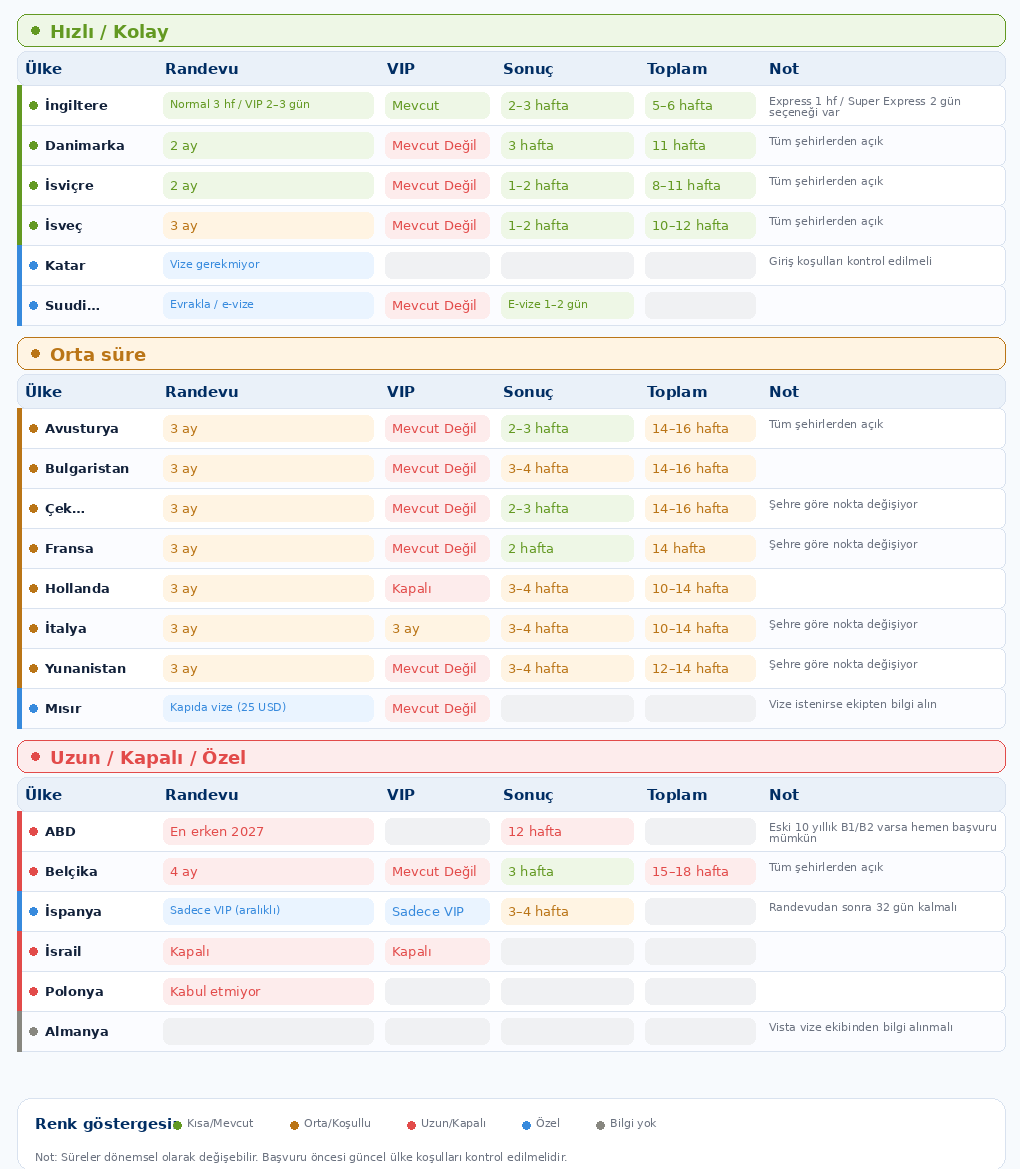
The visa appointment problem refers to situations where suitable appointment dates are unavailable, application centers experience high demand, appointment systems appear fully booked, or consular processing times cannot meet the planned travel date.
This issue becomes particularly visible during:
- Summer holiday and holiday-season travel periods
- Trade fair, congress, and international event seasons
- Year-end and beginning-of-year business travel periods
- Periods of increased consular workload
- Group and large-scale corporate travel programs
In corporate travel, the inability to secure a visa appointment is not merely a scheduling issue. It can affect airline tickets, hotel reservations, transfers, meeting schedules, and event participation.
When Should a Visa Application Be Submitted?
The ideal timing depends on the destination country and visa category. For Schengen visas, applications can generally be submitted no earlier than six months before travel and no later than fifteen days before departure. However, this official window does not guarantee appointment availability. During peak periods, preparation should begin much earlier.
For a UK Standard Visitor Visa, applications may be submitted up to three months before travel. Therefore, starting preparations 12–14 weeks in advance is recommended for UK business travel.
The critical distinction is:
Being prepared early and reaching the official application eligibility date are two different things.
As soon as travel plans are confirmed, companies should review passport validity, destination requirements, documentation needs, and appointment availability. Completing preparations before the application window opens minimizes delays.
Why Is the Visa Appointment Problem More Critical for Corporate Travel?
For individual travelers, visa delays typically affect one person. In corporate travel, visa appointment issues can disrupt company meetings, trade fair participation, dealer events, training programs, and international business engagements.
If visa processes are not managed correctly:
- Airline tickets and hotel reservations may become wasted expenses.
- Meetings or trade fair participation may be canceled.
- Participant lists in group travel may need revision.
- Event schedules may require restructuring.
- Companies may miss valuable business opportunities.
- Operations, HR, and finance teams may face additional workload.
Therefore, corporate visa processing should be treated as a dedicated control category within company travel policies.
Visas are no longer an operational detail; they are an essential part of corporate travel risk management.
What Should Companies Do If They Cannot Find a Visa Appointment?
Companies should first clarify their travel date, destination country, application center, passport validity, and travel purpose. Appointment systems should then be monitored regularly, country-specific requirements should be verified through up-to-date sources, and travel plans should be reassessed according to visa-related risks.
The recommended approach is:
- Check visa requirements as soon as travel plans emerge.
- Review passport validity and available blank pages.
- Verify the latest destination-country requirements.
- Monitor appointment availability consistently.
- Prepare all required documentation completely.
- Manage airline and hotel reservations with flexibility.
- Develop contingency plans for critical meetings, congresses, and trade fairs.
Last-minute applications are not a reliable strategy, especially during peak periods. Taking action early is the most important advantage in visa management.
Why Do Visa Processing Times Differ by Country?
Visa appointment availability and processing times vary according to the destination country, application center, travel season, consular workload, applicant profile, and completeness of submitted documentation.
As a result, there is no universal processing timeline. Appointment dates may be weeks away in some countries. VIP services may be unavailable at certain times. Some application centers apply regional restrictions, while others may temporarily limit application acceptance.
The healthiest approach for companies is to perform a country-specific visa review for every trip.
Viking Tourism recommends checking current visa requirements as soon as travel plans are finalized and structuring the application process accordingly.
What Is the Most Common Mistake in Corporate Visa Processing?
The most common mistake is starting the visa process only after airline tickets and hotel reservations have been finalized.
This approach now carries significant risk. Appointment shortages, missing documents, or consular delays can prevent applications from being completed in time, resulting in financial and operational losses.
The correct sequence is:
- Define the destination country and travel purpose.
- Verify visa requirements.
- Review appointment availability.
- Begin document preparation.
- Plan flights and accommodation according to visa risk.
- Finalize travel plans after the application outcome is known.
Reversing this sequence increases operational risk.
How Does Viking Tourism Support Corporate Visa Processing?
Viking Tourism does not view visa processing merely as document collection. We treat it as a comprehensive operational step that supports business travel planning and risk reduction.
Our teams assist corporate clients with visa requirement verification, appointment monitoring, country-specific document guidance, and travel plan management based on visa-related risks.
Early visa planning is particularly critical for:
- Trade fair participation
- Congress and seminar travel
- International client meetings
- Training programs
- Dealer trips
- Executive travel
- Group business travel
- MICE organizations
Our philosophy is simple: Visa risks should be identified at the beginning of travel planning, not at the last minute.
Visa decisions always remain subject to the evaluation of the relevant consulate or authorized authorities. However, proper planning, complete documentation, and timely application management help companies navigate the process more effectively.
Corporate Visa Processing Checklist
The following items should always be reviewed during corporate travel planning.
1. Passport Validity
Verify passport validity, available blank pages, and passport type.
2. Travel Purpose
Clearly define whether the trip is for a meeting, trade fair, training, congress, or business visit.
3. Country-Specific Documentation
Document requirements vary by country. Business invitations, company letters, activity certificates, signature circulars, financial records, and travel reservations may differ.
4. Appointment Availability
Appointment systems can fill up quickly during peak periods. Availability should therefore be monitored early.
5. Flexible Travel Planning
Flight, hotel, and transfer arrangements should be managed with flexibility according to visa-related risks.
6. Contingency Planning
For critical business travel, alternative meeting dates, participant lists, or representatives should be evaluated in advance.
The Visa Process Is Not the Final Step of Travel Planning—It Is the First Checkpoint
As visa appointment shortages continue to grow, companies should not manage international travel using outdated assumptions. For destinations such as the Schengen Area, the United Kingdom, the United States, and other high-demand countries, visa planning should begin weeks before travel.
Corporate visa processing is a strategic process that requires early planning to reduce time, cost, and operational risks. Proper timing, up-to-date information, complete documentation, and appointment monitoring are critical factors.
Viking Tourism supports corporate clients with early planning, accurate guidance, and operational follow-up throughout the process.
Strong corporate travel planning begins with managing the visa process on time.